
When looking for a dental clinic, most people start by searching Google right on their phone, often when they have an urgent need such as a toothache or want advice on braces. In that moment, a slow-loading website, missing dentist information, or an unclear booking process will send the patient straight to another clinic. TEMP Agency’s dental website design focuses on three factors: fast page load speed, transparent dentist information to build trust, and a convenient appointment booking system — all SEO-optimized so the clinic appears easily when patients search for services near their area.
This is also a channel that helps clinics reduce long-term dependence on paid advertising, once service pages have achieved stable rankings.
Why Do You Need Specialized Dental Website Design?
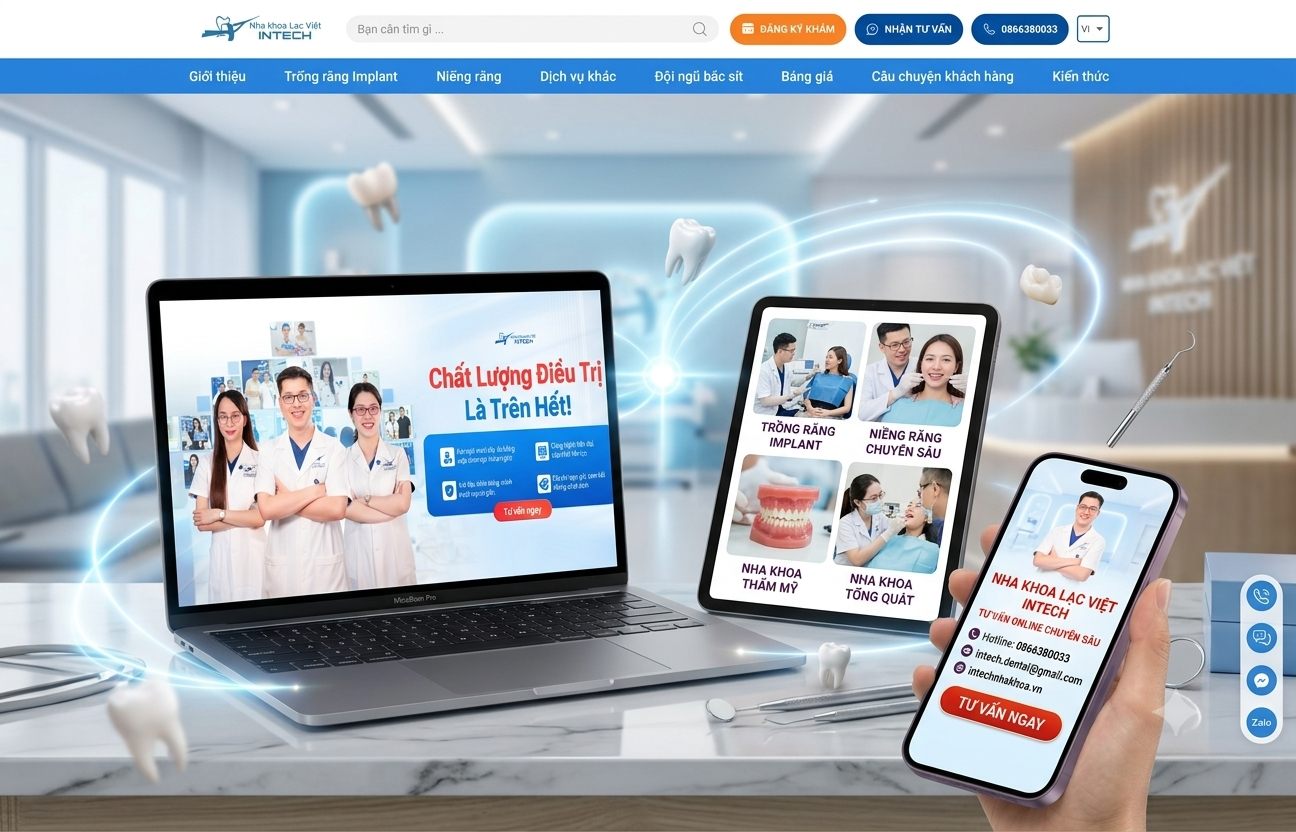
Dentistry is one of those fields where trust directly influences customer decisions, since it involves oral health and a meaningful treatment cost. Patients typically compare several clinics before choosing, based on dentist qualifications, real before-and-after treatment photos, and reviews from previous patients. A well-invested dental website not only attracts new patients through organic search but also reduces front-desk workload, since patients can check pricing, see which dentist is in charge, and book an appointment themselves before calling to confirm.
For high-value services like braces or implants, patients typically need more time to research before deciding, so the more detailed and transparent the website content, the higher the actual conversion rate to booked appointments.
Key Features Your Website Needs
To optimize conversion and the patient experience, a professional dental website needs:
- An online appointment booking system, allowing patients to select the service, dentist, and preferred time slot, reducing the wait for a confirmation call.
- A dentist team page with qualifications, professional certifications, and experience to build trust (E-E-A-T).
- A before-and-after photo gallery for each service (braces, implants, teeth whitening) to help patients picture real results.
- A clear price list broken down by treatment category, avoiding frustration caused by a lack of cost transparency.
- An FAQ section answering common questions about the process, treatment duration, discomfort level, and warranty policy.
- Live chat/Zalo integration and a map to the clinic, prominently displayed on mobile.
- A real patient review/feedback page with a star rating synced to the clinic’s Google Business Profile.
Interface Design Trends
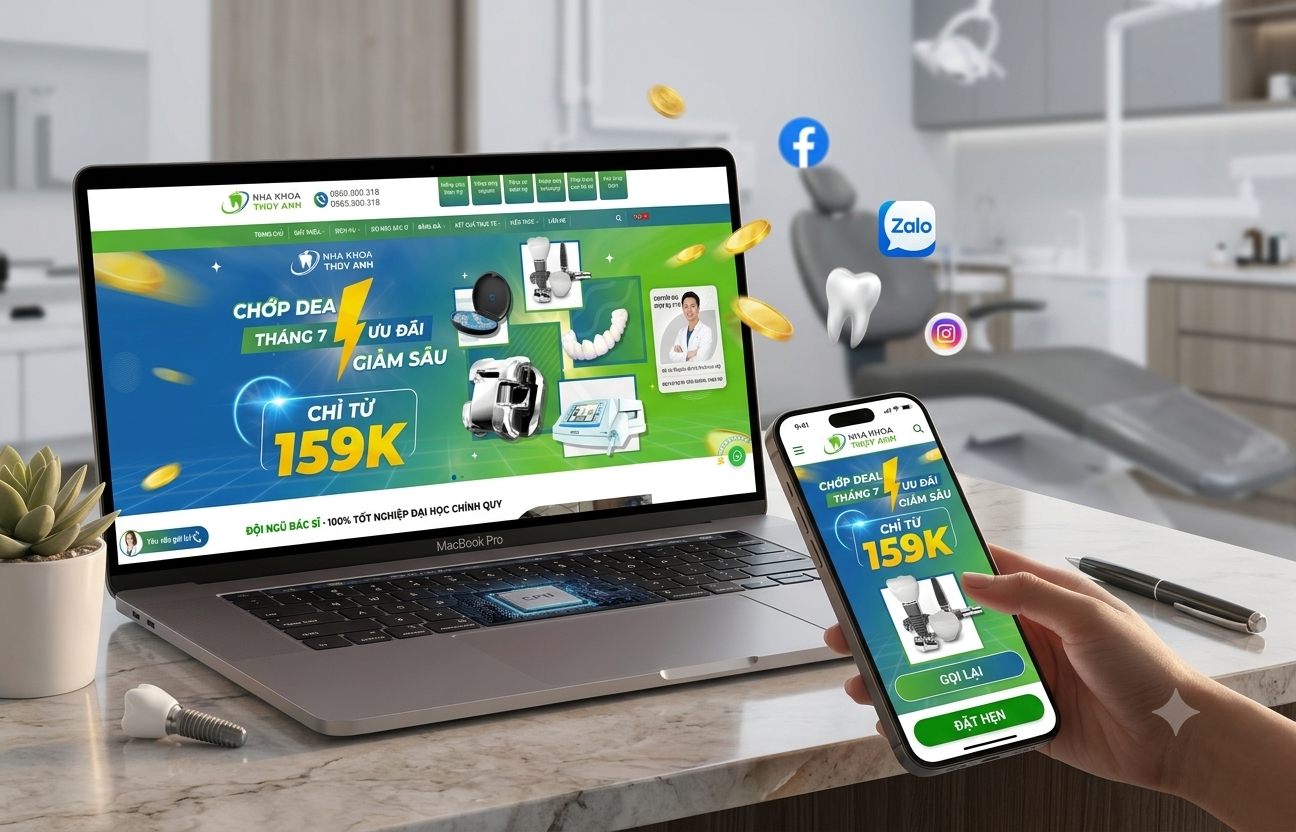
Modern dental website design typically uses clean color tones like white combined with blue or mint green to evoke a medical, professional feel without being too cold. Natural smile photos, dentists in professional white coats, and a clean clinic space are the preferred visual elements. Many clinics are also integrating friendly illustrative icons instead of fear-inducing medical imagery, while prioritizing large, easy-to-read fonts to serve older patients who often search for tooth replacement or implant services.
A recent trend also shows many clinics investing in short videos explaining the treatment process, helping ease patient anxiety before their first visit.
Target Audience And Search Behavior
Patients searching for dental services generally fall into two distinct behavior groups: those needing urgent care (toothache, chipped tooth) search using location-based keywords and tend to call as soon as they find suitable information; the other group is considering high-value cosmetic services like braces or implants, and typically spends several days comparing prices and reading reviews before deciding. For this second group, website content needs to be detailed enough to answer most questions on the first read, since they rarely reach out immediately but return to research multiple times before booking an in-person consultation.
Another notable customer group is parents looking for routine dental checkups for their children, who care a great deal about a kid-friendly space and the experience of pediatric dentists, so website content should include a dedicated section for this group if the clinic offers such services.
Implementation Process At TEMP Agency
TEMP Agency builds dental websites through the following steps: surveying current services and the dentist team, designing the interface to match the clinic’s brand identity, developing the booking system and map integration, then testing across multiple devices before handover along with admin guidance. The team also declares Service schema and FAQPage schema to support rich snippet display in search results.
Implementation typically takes 2–3 weeks depending on the number of services to present, and may take longer if the clinic has multiple branches requiring synced dentist and schedule data.
What Determines The Design Cost?
The cost of dental website design depends on the number of treatment services to present, whether an advanced booking system is integrated, and whether the clinic has one or multiple branches. A single-branch clinic with standard services usually costs less than a multi-branch system requiring synced dentist/schedule data across locations. Clients should get in touch for a detailed quote matching their clinic’s actual scale — see also the packages on the Website Design Pricing page.
Which Package Should You Choose?
For a newly opened or single-branch clinic, the all-inclusive website package with a basic booking system is usually enough to meet initial needs. If the clinic wants to invest heavily in SEO from day one to compete for high-value service keywords like braces or implants, consider the SEO-ready website package for an optimized content structure and load speed right from launch. For multi-branch clinic chains, a custom website package is a better fit for building a centralized appointment management system across locations.
Clinics planning to run Google Ads alongside a flagship service like Invisalign should also consider a separate landing page, apart from the main website, to optimize the conversion rate for the ad campaign without affecting the site’s overall SEO structure.
E-E-A-T And Trust Optimization
TEMP Agency understands that for the healthcare industry, Google places special weight on E-E-A-T (Experience, Expertise, Authoritativeness, Trustworthiness) when ranking content. That’s why every dental website we build through this dental website design process clearly displays dentist qualifications and practicing licenses, transparent contact information, and a clear service warranty policy — helping the clinic build patient trust while better meeting search engines’ evaluation criteria for medical content.

Common Mistakes To Avoid
A common mistake is a clinic posting only generic service information without a specific price list, forcing patients to call multiple times before deciding to book, adding to the front-desk workload. Another mistake is skipping patient consent before posting before-and-after photos, which can raise personal data privacy issues. In addition, many dental websites use fonts that are too small or overly complex layouts, creating difficulty for older patients, who are the primary audience for services like tooth replacement and implants.
Content For Long-Term SEO
Besides the main service page, dental clinics should build additional Q&A-style content around common questions like braces cost by bracket type, recovery time after wisdom tooth extraction, or the differences between teeth-whitening methods. These informational keywords have steady search volume, helping the clinic appear during the patient’s research phase before deciding on treatment. This content is also a good opportunity to internally link to the corresponding service and pricing pages.
Case Study / Real Results
For dental clinics already using this approach, TEMP Agency has found that adding real before-and-after photos alongside patient reviews significantly increases the number of bookings through the website compared to displaying service information alone — especially for high-value services like braces or implants, where patients need extra real-world proof before deciding.
Frequently Asked Questions
Does a dental website need an online booking feature?
It’s not mandatory but highly recommended, as it lets patients book outside office hours and reduces the front desk’s confirmation workload.
Should a detailed price list for each service be published on the website?
Yes, since price transparency is a key factor that builds patient trust and speeds up decision-making, while reducing repetitive phone questions.
Do before-and-after treatment photos require patient consent?
Yes, patient consent is required before posting such photos — this is also part of professional transparency and ethics requirements.
Does a dental website need to be optimized for multiple branches?
If the clinic has multiple locations, each branch should have its own page with address, map, and a separate LocalBusiness schema to optimize for local search.
How long does dental website design take?
Usually 2–3 weeks, depending on the number of services to present and how customized the booking system needs to be.
Should a dental knowledge blog be integrated into the website?
Highly recommended, since a blog answers common questions from prospective patients and helps the website rank for many treatment-related informational keywords.
What level of website should a newly opened clinic invest in?
Start with the all-inclusive package featuring basic booking, then gradually expand into SEO and a knowledge blog once the patient base is stable.
If your clinic needs a professional dental website that builds patient trust and makes booking easy, leave your details on the Contact page or call our hotline 0987205210 for a free consultation from TEMP Agency.