
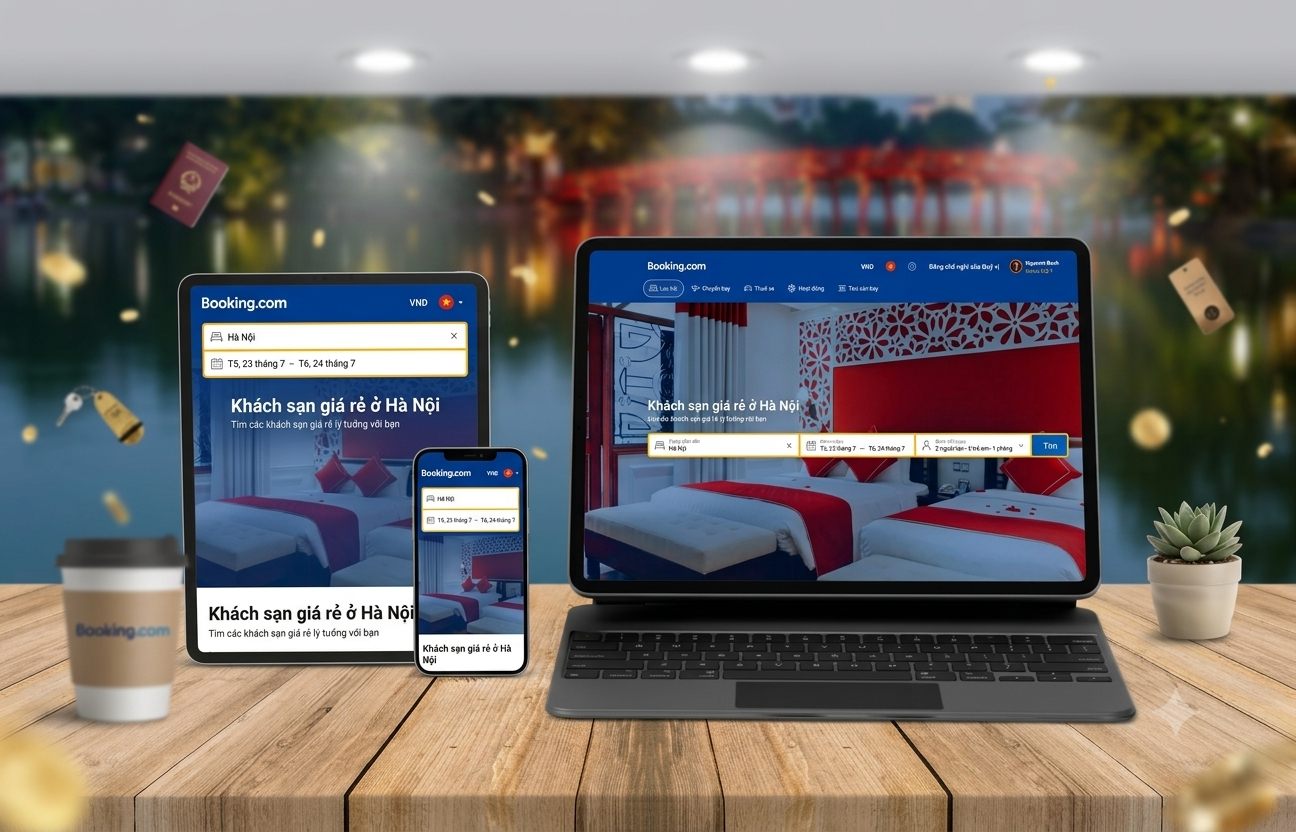
Before booking a dinner table or a hotel room, most customers check a website or social media page to see the menu, the space, and reviews from previous guests. A restaurant/hotel website lacking quality images or a clear way to book a table/room loses the conversion opportunity right at the first step. TEMP Agency’s restaurant and hotel website design features carefully produced photography of the space and dishes, integrated online table/room booking, and SEO-ready optimization so both local customers and tourists can easily find you.
This is also a channel that reduces dependence on third-party booking platforms, which charge no small commission on every transaction.

Why Do You Need Specialized Restaurant and Hotel Website Design?
The F&B and hospitality industry is unique in that decisions are often made very quickly — within a few minutes of searching on a phone, especially when the customer is on the move or planning an urgent meal or trip. That’s why page speed, appealing images, and the ability to book a table/room directly on the website (instead of calling) directly affect conversion rate.
For hotels serving international guests, the website also needs multilingual support and displayed reviews from travel platforms to build trust before a booking decision. In addition, owning a direct booking channel through the website lets the business retain all customer data for future care and repeat invitations.
Key Features Your Website Needs
An effective restaurant/hotel website needs:
- An electronic menu or room-type listing presented visually with high-quality images and reference prices.
- An online table or room booking system, showing real-time availability if integration is possible.
- A directions map and clear operating hours, especially important for first-time visitors to the area.
- A photo/video gallery of the venue or hotel space, accurately reflecting the style and real experience.
- Integration of real customer reviews, or a link to Google Reviews/TripAdvisor to build trust.
- Multilingual support (at minimum English) if serving international guests or located in a key tourist area.
- Information about add-on services (event hosting, airport transfer, in-hotel spa…) to increase average order value.
Interface Design Trends
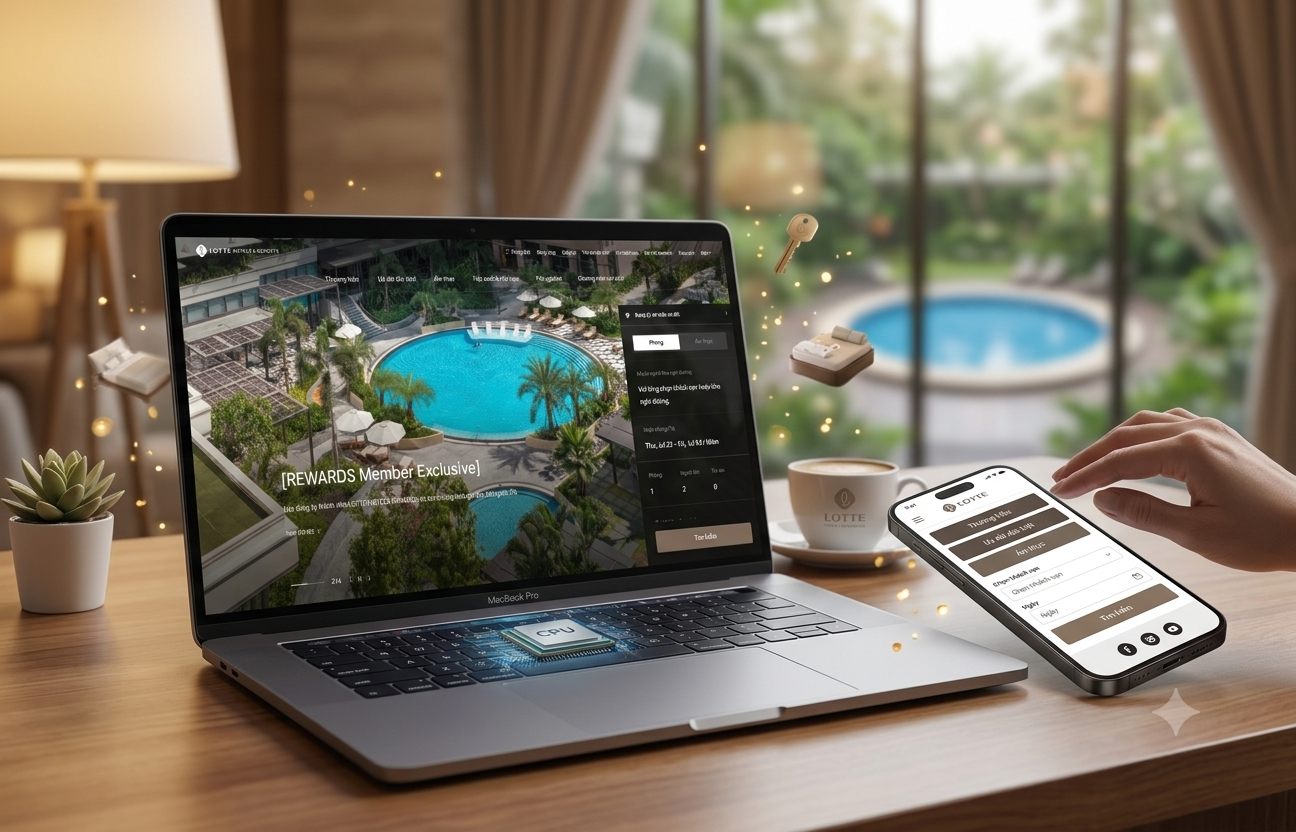
Modern restaurant and hotel website design prioritizes high-quality full-screen images and video to convey the atmosphere and culinary or resort experience from the very first scroll. Warm, inviting color tones are common for restaurants, while resort hotels tend to choose natural tones (green, beige, ocean blue) to evoke relaxation.
Many websites also integrate a short introductory video right on the homepage, replacing static images, to increase emotional impact and time on page. A recent trend also favors displaying star ratings right on the homepage for instant credibility.
Target Audience And Search Behavior
Restaurant customers typically search based on immediate needs (dinner tonight, a weekend party) and decide within minutes based on food photos and proximity. Hotels, on the other hand, serve two distinct groups: business travelers who need to book quickly with little interest in emotional imagery, and leisure travelers who spend more time comparing photos, amenities, and reviews before booking weeks ahead of their trip.
Website content and response speed therefore need to be designed flexibly to serve both search behaviors well. In addition, customers booking events (birthdays, conferences, weddings) typically search for space capacity information and bundled service packages, so if the venue serves this segment, a dedicated landing page is worth having instead of merging it with regular table/room booking information.
Implementation Process At TEMP Agency
TEMP Agency builds restaurant and hotel websites through the following steps: gathering images/menu or room pricing, designing an interface that accurately reflects the brand style, developing table/room booking and map integration, then optimizing load speed for large images before handover. The website is also declared with Service and Review schema to support star-rating display right in Google search results — a factor with major influence on customer decisions in this industry.
Implementation typically takes 2–4 weeks depending on the complexity of the booking system.
What Determines The Design Cost?
Cost depends on whether real-time table/room booking is integrated versus a simple advance-request form, the number of languages needed, and the number of dishes/room types to present. A hotel with many room types requiring sync with a property management system (PMS) costs more than a restaurant that only needs to display a menu and accept basic table bookings. Clients should clearly discuss their business scale to get the most accurate quote — see also the Website Design Pricing page.
Which Package Should You Choose?
For small and mid-sized restaurants, the all-inclusive website package with an electronic menu and a booking form is a fast, cost-effective choice. For hotels with many room types wanting to reduce dependence on OTA platforms, invest in the custom website package to integrate a dedicated booking system synced with an internal PMS. If you only need to promote a seasonal offer or a short-term event, a standalone landing page is more cost-effective than reworking the entire main website.
For restaurant chains with multiple branches, also consider the SEO-ready website package so each branch has its own page optimized for local keywords, helping local customers easily find the nearest branch instead of only having one generic information page for the whole chain.
E-E-A-T And Trust Optimization
TEMP Agency prioritizes integrating real customer reviews and unedited or lightly edited images to ensure authenticity, since F&B and hospitality customers are very sensitive to the gap between promotional images and the real experience. Clearly displaying contact information, operating hours, and a transparent booking/cancellation policy also builds trust with new customers, especially tourists who have never heard of the brand before.
For hotels, syncing star ratings from multiple sources (Google, OTA platforms) right on the homepage is also a strong trust signal, reassuring new guests who must book in advance without having experienced the service firsthand.
Common Mistakes To Avoid
A common mistake is listing only a phone number with no online table/room booking feature, causing customers to give up during off-hours when they can’t call. Another mistake is using food/room images that don’t match reality, causing disappointment and negative reviews once guests experience the venue in person. In addition, many websites omit table/room cancellation policy information, leading to unnecessary disputes with customers.
Another common mistake at small hotels is not updating room availability in real time, causing customers to book a room only to have to cancel because it’s already full — a poor experience from the very first interaction.
Content For Long-Term SEO
Beyond the main introduction page, restaurants should build additional content about signature dishes, ingredient stories, or the chef, while hotels should feature content introducing nearby attractions and local travel tips. This content attracts customers from the planning stage while supporting SEO for long-tail keywords related to destinations and experiences, instead of competing only for generic keywords like the business type name.
This guide-style content is also very shareable on social media, helping drive additional organic traffic to the website beyond Google search alone.
Case Study / Real Results
For restaurants and hotels already using this approach, adding a table/room booking feature directly on the website — instead of only listing a phone number — has significantly reduced the rate of visitors leaving without providing contact information, especially during off-hours when they can’t call directly.
Frequently Asked Questions
Does a restaurant website need online table booking?
Yes, especially for restaurants busy on weekends, since it lets customers reserve a table outside business hours without calling.
Does a small hotel need a complex booking system?
Not necessarily. For small-scale hotels, a simple booking form with phone/Zalo confirmation is enough, saving cost compared to a full PMS system.
Do I need a multilingual website from the start?
If your primary audience is international guests or you’re located in a tourist area, an English version should be included from the start so you don’t miss that segment.
Do food/room photos need to be professionally shot?
Highly recommended, since imagery is the biggest deciding factor in this industry. Low-quality images can make customers doubt the actual service quality.
How long does restaurant/hotel website design take?
On average 2–4 weeks, depending on whether an advanced table/room booking system is integrated and how many languages need support.
Should the website integrate directly with OTA platforms (Booking, Agoda)?
You can integrate both in parallel, but it’s best to prioritize growing the direct booking channel on your website to reduce dependence on third-party commission fees.
What package should a new restaurant or hotel start with?
Start with the all-inclusive package with basic table/room booking, then upgrade to a custom system as the business scales.
If your restaurant or hotel needs a professional website that makes booking easy and builds trust from the very first visit, leave your details on the Contact page or call our hotline 0987205210 for a tailored consultation and free quote from TEMP Agency within 24 hours.