

Building or renovating a property is a major financial decision, so homeowners typically research thoroughly before choosing a contractor: reviewing past projects, reading the workflow, and comparing quotes across multiple firms. A construction website lacking real project photos or a clear construction process struggles to build trust with customers weighing a significant investment.
TEMP Agency’s construction website design focuses on presenting real capability through actual project photos, a transparent process, and SEO-ready optimization so contractors reach the right customers looking to build or renovate, while reducing unnecessary repeat questions during initial consultation and shortening the customer’s decision time.
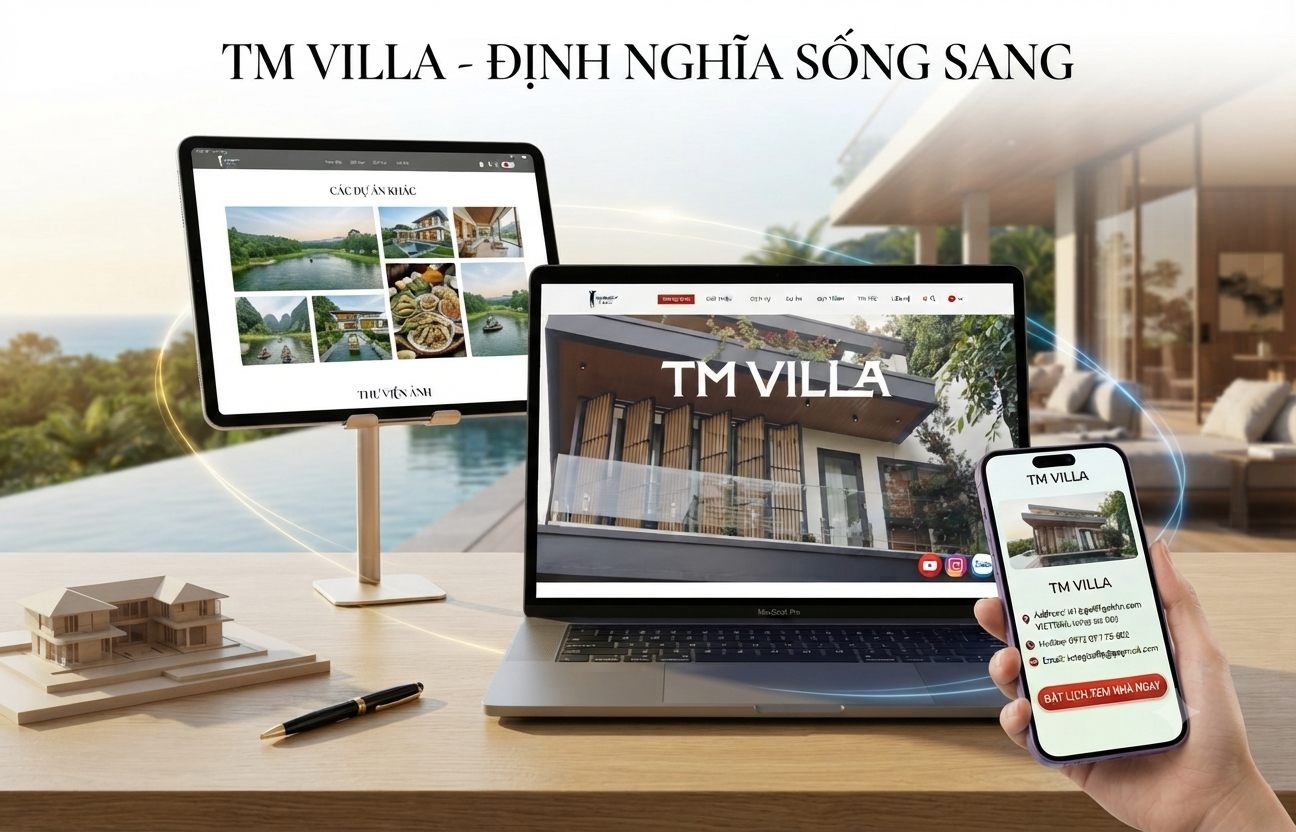
Why Do You Need Specialized Construction Website Design?
The construction industry faces a significant trust challenge, since customers have often heard many stories of contractors running behind schedule or racking up unexpected costs. A website that clearly presents completed projects with specific data (area, construction time), a transparent step-by-step process, and a reference price list by category will help a contractor stand out from competitors with only a generic introduction page, increasing the likelihood customers will request a site survey.
For high-value projects, letting customers preview real capability through the website significantly shortens the vetting cycle before signing a contract. In addition, since construction is a field where customers typically only have a need once every several years, they rarely have existing experience to evaluate a contractor, so the more transparent and easy to understand the website content, the more confident customers feel making a decision.
Key Features Your Website Needs
A professional construction website needs the following features:
- A gallery of completed projects, categorized by type (townhouse, villa, renovation…) with before-and-after images.
- A construction process presented step by step, from survey and design to construction and handover.
- A reference price list by category or per square meter of construction, giving customers a sense of budget.
- A free site-survey request form, collecting area and project-type information.
- Information about the engineering team, construction capability certifications, and flagship projects.
- An FAQ section answering questions about construction timeline, project warranty, and cost-overrun policy.
- A photo-based construction log updating weekly progress for ongoing projects, boosting transparency for current clients.
Interface Design Trends
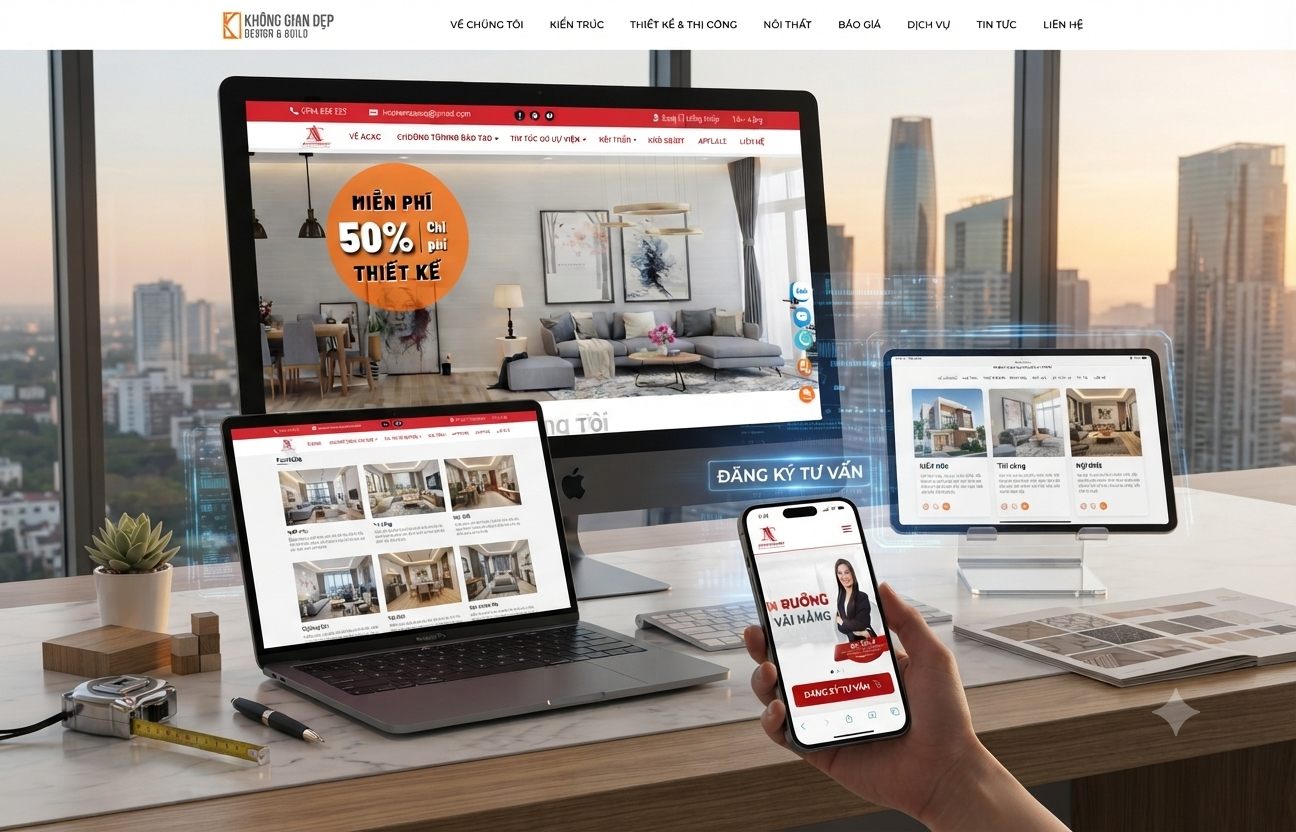
Modern construction websites typically use real job-site photos instead of staged images, combined with before-and-after photos to visually demonstrate construction capability. Color tones tend to be industrial and professional, like gray, earthy orange, and navy. Many contractors also integrate a photo-based construction log updating weekly progress for each project, increasing transparency with current clients while also serving as strong persuasive content for prospective customers researching the firm.
Some large construction companies are also starting to integrate timelapse video capturing the entire process from groundbreaking to completion, creating an impressive visual effect and clearly demonstrating the team’s schedule-management capability.
Target Audience And Search Behavior
First-time homeowners typically lack experience and need thorough guidance from the most basic steps, while investors building rental or commercial properties care more about cost optimization and completion timeline to start generating returns sooner. For renovation projects, homeowners tend to worry more about unexpected cost overruns than with new construction, so website content for renovation services should place special emphasis on quote and process transparency.
Implementation Process At TEMP Agency
TEMP Agency builds construction websites through the following steps: gathering project photos, the construction process, and a reference price list, designing an interface that conveys professionalism and trust, developing the survey-request form and project gallery, and optimizing load speed for high-quality project images before handover. The website is declared with Service schema and a clear breadcrumb structure to support SEO for each project type. Implementation typically takes 2–4 weeks depending on the number of projects to present.
What Determines The Design Cost?
The cost of construction website design depends on the number of projects to present, how detailed the construction process needs to be, and whether a preliminary quote tool is integrated versus a simple contact form. A contractor specializing in one project type (e.g., townhouses only) will cost less than a construction company handling a diverse range from residential to commercial projects.
For companies wanting to share regular construction logs across multiple ongoing projects at once, it’s worth budgeting for an easy-to-use content management area so site supervisors can update photos themselves without needing continuous technical support.
Which Package Should You Choose?
For a small contractor specializing in one project type, the all-inclusive website package with a basic project gallery is a sensible choice. For a large construction company with diverse project types wanting to build a strong brand on Google, invest in the SEO-ready website package combined with home-building guide content to attract prospective customers from an early stage, rather than only reaching customers at the final step once they’re ready to sign a contract.
E-E-A-T And Trust Optimization
TEMP Agency encourages clients to provide real data for completed projects (area, construction time, reference cost) along with construction capability certifications and operating licenses, since these are important trust factors that reassure customers entrusting a contractor with a large investment. Clearly disclosing the supervising engineering team, construction practicing certifications, and industry awards (if any) also boosts brand credibility compared to informal contractors without a clear capability record.
Common Mistakes To Avoid
A common mistake is posting project photos without specific data on area or construction time, making it hard for customers to assess real capability. Another mistake is not clearly disclosing the construction process, leaving customers worried about unexpected costs or delays. In addition, many construction websites skip updating progress for ongoing projects, missing the opportunity to build trust with both current and prospective customers watching.
Another mistake is not clearly stating the post-handover warranty policy, leaving customers uneasy about the contractor’s responsibility if issues arise after full payment.
Content For Long-Term SEO
Beyond the project gallery, a contractor should build content guiding what to prepare before building a home, tips for choosing materials that fit the budget, or explanations of common additional costs. This content attracts customers from the moment they first start planning construction, before they’ve chosen a specific contractor to work with.
Guide content about building permits and the legal procedures needed before groundbreaking is also an informational keyword group with steady search volume, well suited for building long-term SEO articles for the website.
Case Study / Real Results
For contractors that have built a website this way, adding specific area and construction-time data for each project in the gallery has clearly increased trust compared to displaying photos alone without accompanying information, leading to more site-survey requests. Adding real feedback from past homeowner clients has also helped reinforce trust for new customers currently researching and comparing multiple contractors.
Frequently Asked Questions
Does a construction website need an automated quote tool?
Not mandatory, but a reference price list per square meter gives customers a preliminary sense of budget before requesting a real site survey and detailed quote.
How many projects should be presented on the website?
Select flagship projects for each type, with specific data attached, rather than posting too many images without accompanying information.
Should the detailed construction process be publicly disclosed?
Highly recommended, since it helps customers understand exactly what steps they’ll go through, reducing anxiety about unexpected surprises.
Does a construction website need to update progress for ongoing projects?
If possible, sharing a weekly construction log for ongoing projects significantly increases transparency with both current and prospective customers.
How long does construction website design take?
On average 2–4 weeks, depending on the number of projects to present and how detailed the construction process needs to be.
Should construction capability certifications be published on the website?
Highly recommended, since this is an important legal and trust factor that reassures customers entrusting a high-value project.
What package should a small contractor start with?
Start with the all-inclusive package with a basic project gallery, then upgrade to SEO-ready once you’ve accumulated enough flagship projects to build content around.
Should a construction timelapse video be produced?
If the budget allows, this is very persuasive content, visually demonstrating the contractor’s schedule-management capability and construction quality.
If your construction company needs a professional, transparent website that builds trust with customers from the very first research step, leave your details on the Contact page or call our hotline 0987205210 for a free consultation from TEMP Agency within 24 hours.