
Parents and students today research courses or schools almost entirely through Google before visiting in person. An education website lacking clear program details, enrollment schedules, or tuition information forces parents to call repeatedly, slowing down the admissions process. TEMP Agency’s education website design uses a dedicated landing page for each course/program, integrated quick-consultation sign-up, and SEO-ready optimization, helping your center or school reach the right parents who are searching for the right learning solution.
This is also a channel that lowers admissions costs over the long term, once course pages achieve stable Google rankings.
Why Do You Need Specialized Education Website Design?
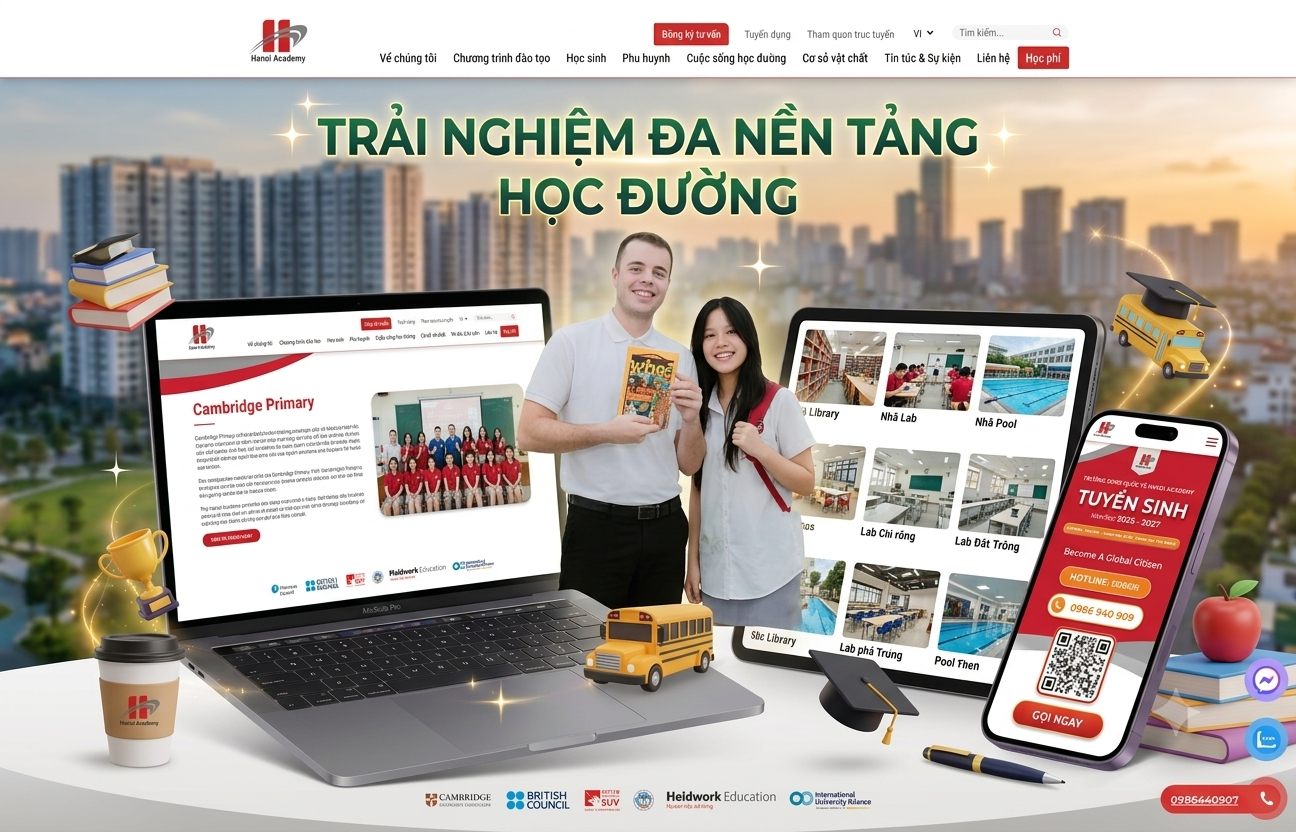
Education is unique in that the decision cycle tends to be longer than other industries, since parents need to compare many factors: curriculum, teaching staff, tuition, and reviews from former students. A well-organized website, with a dedicated landing page for each course and a knowledge blog, not only increases organic traffic but also builds professional credibility throughout the parent’s entire research journey — rather than only appearing at the final step once they’ve nearly decided.
In addition, for centers with multiple locations or course levels, the website helps route the right audience from the very first page, avoiding confusion between different programs. Another equally important aspect is enrollment seasonality — most peak sign-up periods cluster around fixed times of year, so the website needs to handle sudden traffic spikes during those periods without disruption.
Key Features Your Website Needs
An effective education website should be equipped with the following features:
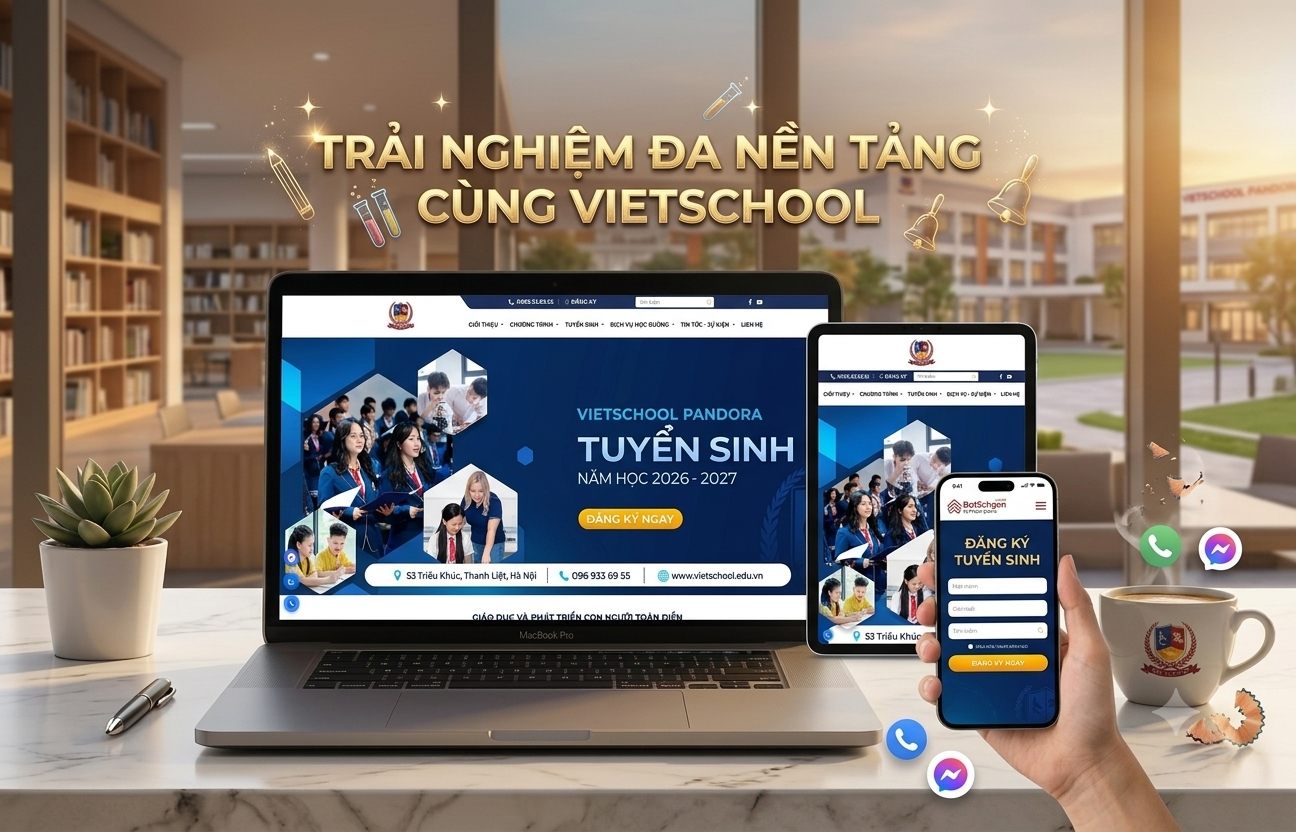
- A dedicated landing page for each course/training program, clearly presenting content, duration, suitable audience, and tuition.
- Regularly updated enrollment schedules, with remaining seats shown to create a sense of urgency for early sign-up.
- A consultation/course-info request form placed in multiple positions on the page to avoid missing lead-capture opportunities.
- A teaching staff page with qualifications and teaching experience to build trust with parents.
- Program introduction videos or testimonials from students/parents who have completed the course.
- A knowledge blog covering topics related to the field of study, increasing top-of-funnel traffic and building long-term professional credibility.
- A student achievements/results page (scores, awards, pass rates…) where relevant to the training type, as proof of teaching quality.
Interface Design Trends
Modern education website design typically uses youthful, friendly tones like yellow, orange, and light blue to create an energetic feel suited to younger students. Real photos of students in class and extracurricular activities are preferred over stock images, since they feel more authentic and relatable to parents. Many centers also integrate a short video showing the classroom atmosphere right on the homepage, instead of relying only on text and static images.
For programs targeting working professionals, the design trend leans more professional and minimal to suit an adult audience. Many large centers are also adding a visual learning-path diagram, helping parents and students easily picture the entire journey from enrollment to program completion.
Target Audience And Search Behavior
Parents looking for courses for their children typically search in the evening after work, caring most about a schedule that fits, the teaching staff, and feedback from other parents whose children have attended. Adult learners searching for courses for themselves (languages, skills, professional certificates) tend to compare tuition and schedule flexibility more, and often decide faster when there’s a clear early-registration incentive.
Course landing page content should therefore adjust its tone and information focus depending on whether the audience is children, students, or working adults.
Implementation Process At TEMP Agency
TEMP Agency builds education websites through the following steps: gathering program information, tuition, and teaching staff details, designing an interface suited to the target audience (children, students, working adults), developing course landing pages and sign-up forms, then integrating a knowledge blog to support long-term SEO. The website is also declared with Course schema to help Google display program details directly in search results. Before handover, the website is tested for the consultation sign-up experience on mobile, since most parents interact on their phones.
Implementation typically takes 2–4 weeks depending on the number of courses needing a dedicated landing page. Throughout the process, TEMP Agency also communicates regularly with the center to ensure course content accurately reflects the actual curriculum, avoiding a mismatch between the website and what students experience once enrolled.
What Determines The Design Cost?
The cost of education website design depends on the number of courses/programs needing a dedicated landing page, whether a basic learning management system (LMS) is integrated, and whether a knowledge blog is needed from the start or can wait for a later phase. A center with just a few courses costs less than a school system with multiple grade levels and diverse training programs.
Clients should clearly discuss their training scale to receive the right quote. For schools with multiple locations, cost also increases with the need to sync admissions information and enrollment schedules across branches, which should be budgeted separately from the project-planning stage.
Which Package Should You Choose?
For a newly established center with just a few courses, the all-inclusive website package with basic course landing pages is a sensible choice for quickly starting enrollment. For an established brand wanting to invest long-term in SEO to reduce reliance on advertising, consider the SEO-ready website package combined with a knowledge blog built from day one. If you only need a short-term enrollment campaign for one specific course, a standalone landing page will optimize cost and conversion rate better than reworking the entire website.
E-E-A-T And Trust Optimization
TEMP Agency places strong emphasis on clearly presenting teaching staff qualifications and certifications, along with the center or school’s achievements and accreditations on the website, since this is a key factor building parent trust before deciding to enroll their child. Real reviews from parents and former students are also encouraged for added persuasiveness, especially for higher-tuition courses.
For internationally affiliated programs or those issuing recognized certificates, clearly disclosing the issuing body and accreditation status is also an important trust factor that should be clearly presented on the website.

Common Mistakes To Avoid
A common mistake is lumping all courses onto a single page without clear categorization by level or audience, making it hard for parents to find the right program for their child. Another mistake is not updating enrollment schedules regularly, causing parents to sign up for courses that are already closed or full. In addition, many centers skip collecting reviews from parents/former students, leaving the website without the important social proof needed to persuade new parents.
Another mistake is not clearly publishing tuition, forcing parents to call repeatedly to ask about pricing before considering enrollment, slowing the conversion from interested visitor to enrolled student.
Content For Long-Term SEO
Beyond course landing pages, centers should build a knowledge blog covering topics like effective study methods by age group, tips for choosing the right school/course, or answers to common questions about the learning path. This content attracts parents from the earliest research stage, before they’ve settled on a specific center, while building the image of a center with genuine pedagogical expertise rather than one that simply advertises courses.
Case Study / Real Results
For training centers already using this approach, separating each course onto its own landing page instead of lumping them into one introduction page has significantly improved Google rankings for specific course keywords, while increasing consultation sign-ups thanks to more focused, relevant content.
Frequently Asked Questions
Does an education website need an online learning management system (LMS)?
Not required for an introduction and enrollment website. An LMS is only needed if the center runs online classes and needs to manage lessons and assignments for students.
Should an education website have a knowledge blog?
Highly recommended, since it’s an effective channel for attracting prospective parents/students from the research stage, before they decide to enroll.
Does every course need its own page?
Yes, a dedicated landing page per course keeps content focused on the right keywords and specific search intent, rather than diluting information on one general page.
How can I increase consultation sign-ups through the website?
Place the sign-up form in multiple visible positions, offer a clear early-registration incentive, and make sure course content directly answers parents’ questions.
How long does education website design take?
On average 2–4 weeks, depending on the number of courses needing a dedicated landing page and how much of the knowledge blog is built from the start.
Should an education website display student achievements?
Yes, if relevant to the training type (exam prep, language courses…), since it’s strong proof of real teaching quality.
Which package should a newly established center choose?
Start with the all-inclusive package with basic course landing pages, then expand into SEO-ready features and a knowledge blog once you have a stable student base.
Does an education website need to prepare for enrollment-season traffic spikes?
Yes, hosting and page speed should be well-optimized so the site doesn’t go down during peak enrollment periods throughout the year.
If your center or school needs a professional education website that increases consultation sign-ups and builds lasting credibility, leave your details on the Contact page or call our hotline 0987205210 for a free consultation from TEMP Agency.