
In the beauty industry, customers make decisions almost entirely based on images: before-and-after results, the spa’s ambiance, and the professionalism of the technicians. A spa website with dull images, slow loading, or a cluttered layout will struggle to convince customers to book, no matter how good the service actually is. TEMP Agency’s spa website design delivers an eye-catching interface, a crisp image gallery, and a simple booking flow, helping your spa stand out among the many competitors fighting for attention on Google every day.
Since new treatments launch constantly in this industry, the website also needs to be easy to update so it never falls behind market trends.
Why Do You Need Specialized Spa Website Design?
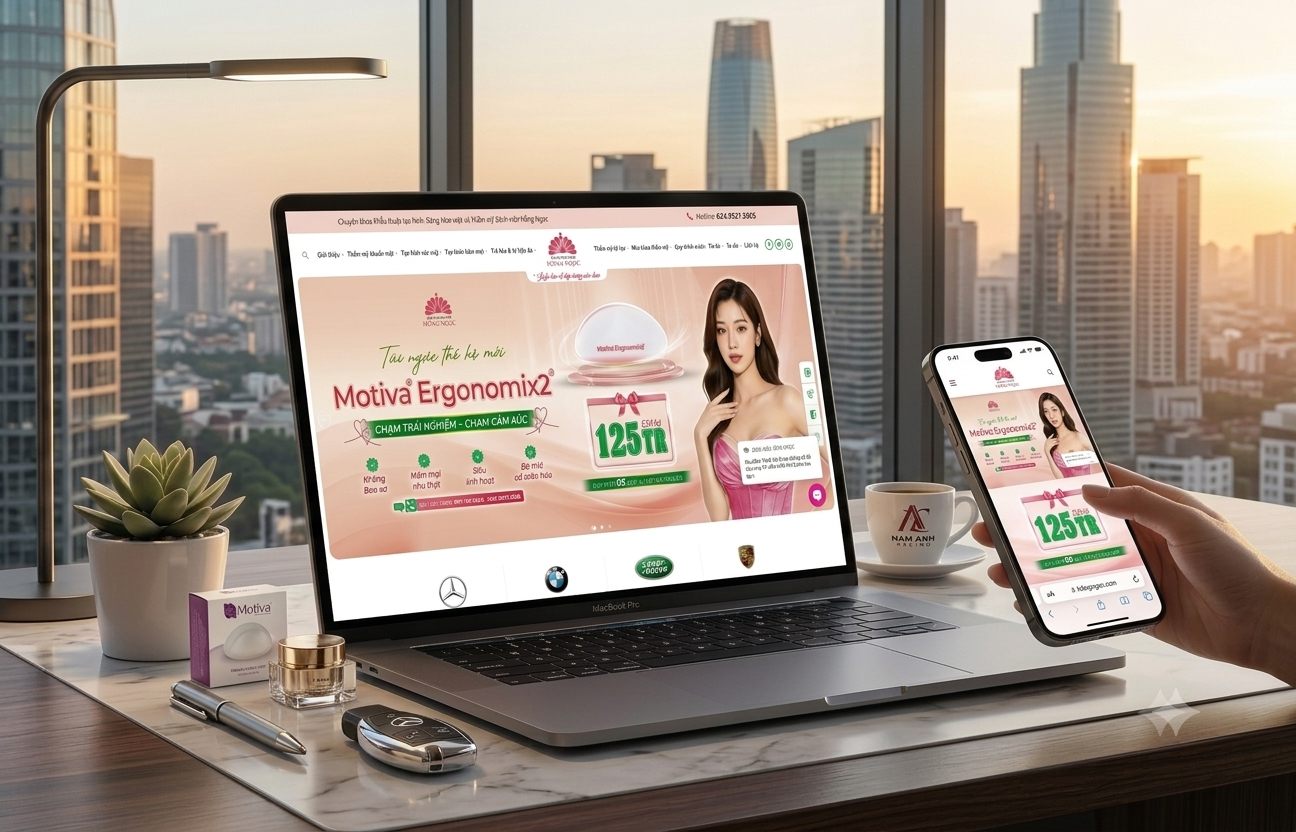
Beauty customers often search for services under immediate pressure (before an event, a holiday) or while comparing price lists across several spas in the area. That’s why page speed and price-list clarity directly affect the booking decision. In addition, most customers in this industry browse on their phone and tend to reach out via Zalo/Messenger rather than calling, so the website needs to be strongly optimized for mobile with an always-visible quick-contact button.
Another unique trait is that customers often return repeatedly for the same treatment, so the website should also support appointment reminders or promotional notices for returning customers.
Key Features Your Website Needs
A professional spa/beauty salon website should include the following features:
- A before-and-after photo/video gallery for each treatment, clearly organized by service category (skincare, weight loss, tattooing…).
- A transparent price list by package, including the number of sessions and expected results.
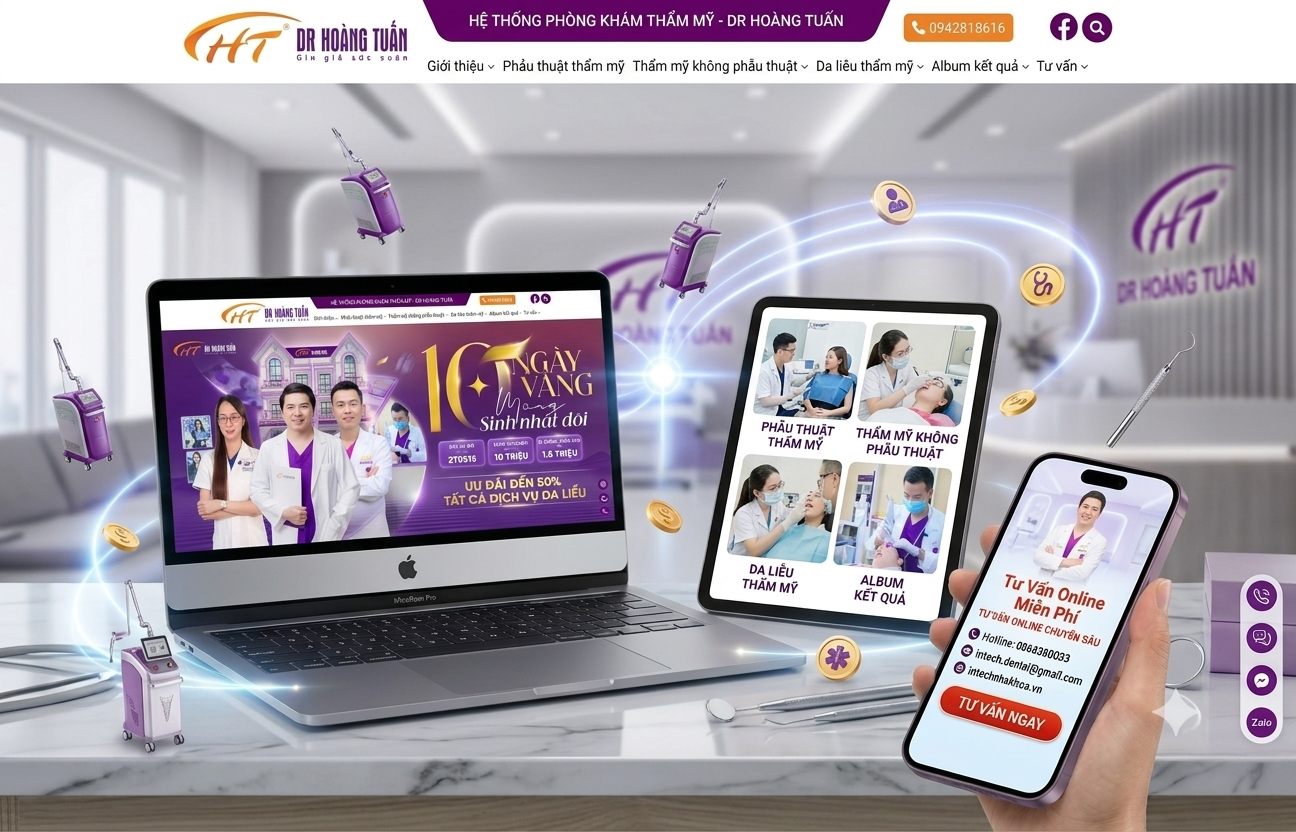
- A prominent booking/Zalo chat button, always fixed on screen so customers can reach out the moment they need to.
- A seasonal or holiday promotion banner, easy to update for short-term marketing campaigns.
- Real customer reviews with photos, boosting trust for higher-cost treatments.
- Social media integration (Instagram, Facebook) to sync the latest visual content without manually updating two places.
- A technician/specialist profile page with training certificates, building trust for minimally invasive treatments.
Interface Design Trends
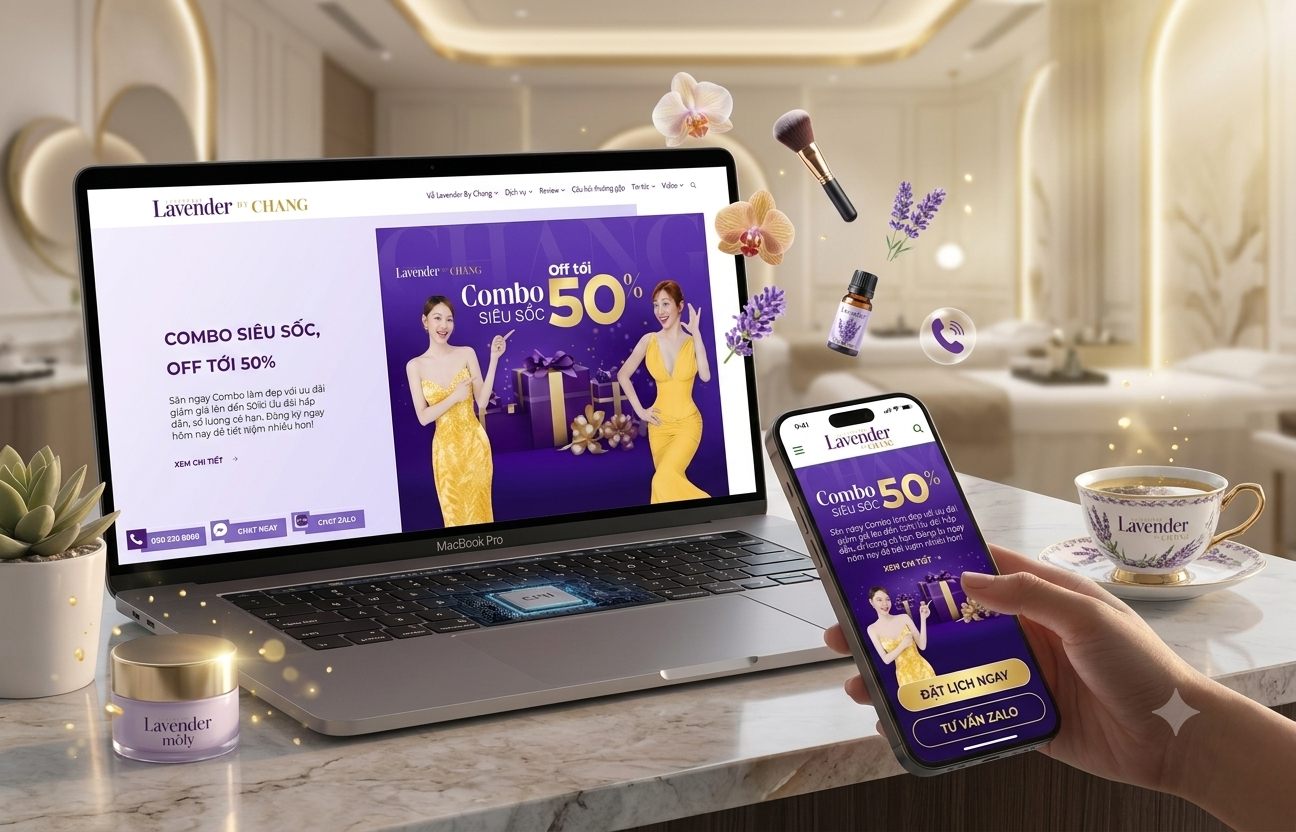
Spa website interfaces today typically lean feminine, using pastel tones like light pink, beige, and cream white to create a soft, relaxing feel. Images need to be professionally shot and edited, avoiding generic stock photos, since customers are increasingly savvy at spotting real versus stock imagery. Smooth hover animations on treatments, along with a grid layout that displays services intuitively, are a popular trend that increases time spent on the page.
Many upscale spas are also integrating an ambiance video right on the homepage to create a relaxing feeling from the very first visit.
Target Audience And Search Behavior
Beauty industry customers are mostly women aged 22–45, typically browsing on their phone in the evening or during lunch breaks, and are strongly influenced by social media imagery before visiting the official website to check detailed pricing. Customers for basic skincare treatments tend to decide quickly, within the same day, while those researching minimally invasive treatments (filler injections, laser) are more cautious, carefully reading the credentials and reviews section before booking an in-person consultation at the spa.
In addition, a growing number of male customers are starting to take an interest in basic skincare services, so if a spa targets this audience too, the content and imagery should be diversified rather than focusing entirely on female imagery.
Implementation Process At TEMP Agency
TEMP Agency’s spa website design process begins by gathering images, service pricing, and brand positioning (upscale, budget-friendly, or a single-treatment specialist). The team then designs the interface, develops booking and chat integration, and optimizes load speed for high-quality images without slowing the page down.
Before handover, the website is checked for mobile display — where most spa customers browse — and Service schema along with Review schema is declared if real reviews are available. Implementation typically takes 2–3 weeks, faster if the spa already has professional images and a clear price list ready.
What Determines The Design Cost?
The cost of spa website design depends on the number of services/treatments to present, the level of investment in the image/video gallery, and whether an automated booking system is integrated versus a simple contact form. A spa with multiple branches or multiple service lines (skincare, weight loss, hair spa) requires a more complex content structure, resulting in a higher cost than a single-service spa. Clients should discuss their specific needs to receive an accurate quote matching their actual business scale.
Which Package Should You Choose?
For a newly opened or small-scale spa, the all-inclusive website package with an image gallery and a basic booking/Zalo button is enough to start attracting customers. For beauty salons with many premium treatments that need to build strong professional credibility, consider investing in the SEO-ready website package combined with a beauty knowledge blog to compete long-term on Google. If the main goal is promoting a short-term seasonal offer, a standalone landing page is more cost-effective than reworking the entire main website.
For spa chains with multiple branches, consider a custom website package to build a centralized appointment management system, letting customers book at whichever branch is most convenient without contacting each location separately.
E-E-A-T And Trust Optimization
TEMP Agency focuses on building trust signals for beauty industry websites: displaying technician training certificates, the origin of products/equipment used, and real customer reviews with names/photos (with consent). These elements help customers feel more confident when choosing a treatment with a meaningful cost, while also better supporting the ranking of health-and-beauty-related content on Google, which is evaluated more strictly than ordinary industries.
For treatments with a medical element, such as filler injections or laser therapy, clearly disclosing the responsible doctor/specialist and the facility’s operating license becomes even more important, since this content falls under Google’s stricter E-E-A-T evaluation standards due to its direct connection to user health.
Common Mistakes To Avoid
A common mistake is a spa using overly edited images, making customers doubt the real results once they experience the service in person. Another mistake is failing to update the price list when a new treatment launches, leading to inaccurate information and wasted time re-consulting from scratch. In addition, many spas overlook optimizing load speed for a large image gallery, causing customers to leave the page before seeing all the treatments they were interested in, especially on slow mobile connections.
A less obvious mistake is failing to sync content between the website and the social media fanpage, causing customers to see different promotional information across the two channels, damaging trust from the very first research step.
Content For Long-Term SEO
Besides the service page, a spa should build additional content such as at-home skin/body care guides, comparisons between popular beauty methods, or safety explanations for each treatment. These informational keywords attract prospective customers from the research stage, while also positioning the spa as a knowledgeable authority rather than just a service seller. This content should also be tightly internally linked to related treatment pages to boost conversion rate.
Case Study / Real Results
For spas and beauty salons already using this approach, optimizing load speed for a high-quality before-and-after gallery combined with a prominent booking/Zalo button has helped many clients significantly increase direct website inquiries compared to relying on their social media fanpage alone, especially during seasonal promotional campaigns.
Frequently Asked Questions
Does a spa website need online payment integration?
Not mandatory, since most customers pay directly at the spa. The website should focus on presenting services attractively and making booking convenient rather than payment.
Should before-and-after customer photos be posted?
Yes, since this is the strongest persuasive element for the beauty industry, but clear customer consent is required before posting.
Does a spa website need to be multilingual?
If the spa serves foreign customers or is located in a tourist area, an English version is worth adding to reach that audience.
How can a spa website stand out from competitors on Google?
It takes a combination of professional visual design, fast load speed, SEO-ready content for each treatment, and regularly collecting real customer reviews.
How long does spa website design take?
Usually 2–3 weeks, faster if the spa already has images and a complete service price list ready.
Does a spa website need a return-visit reminder feature for existing customers?
This is a useful advanced feature for retaining customers who return regularly, especially for treatments requiring several consecutive sessions.
What level of website should a newly opened spa invest in?
Start with the all-inclusive package focused on imagery and basic booking, then gradually expand into SEO and a knowledge blog once you have a stable customer base.
If your spa or beauty salon needs a professional, attractive website that easily converts visitors into booked appointments, leave your details on the Contact page or call our hotline 0987205210 for a consultation from TEMP Agency right away.