

An e-commerce website is not just a place to display products — it’s the customer’s entire purchase journey: searching for products, comparing, adding to cart, checking out, and waiting for delivery. If any single step in this journey is slow or frustrating — a slow-loading page, a complicated checkout, missing shipping information — the customer may leave and never return.
TEMP Agency’s e-commerce website design focuses on page speed, a smooth shopping experience, and full integration of popular payment/shipping gateways in Vietnam, helping businesses sell online more effectively and build their own sales channel independent of third-party marketplaces.
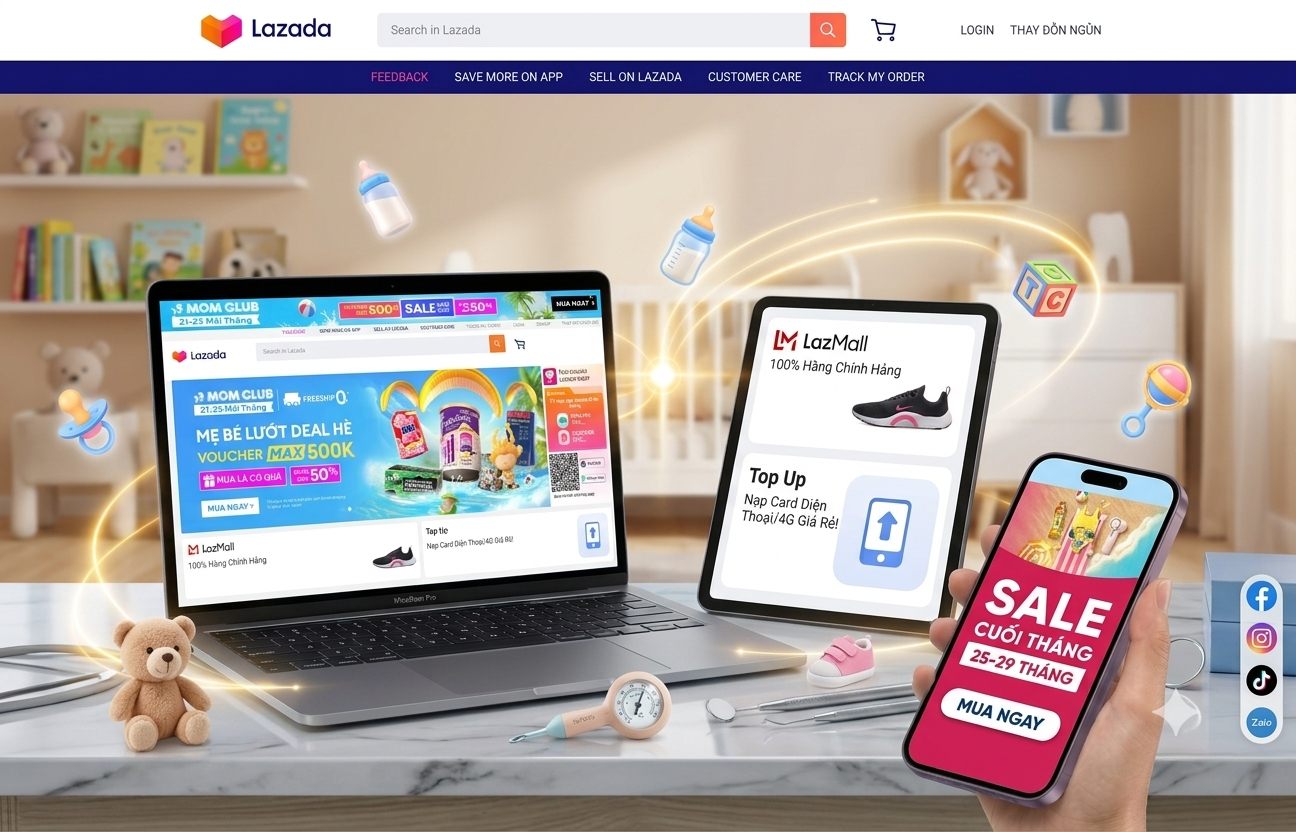
Why Do You Need Specialized E-Commerce Website Design?
This is the most technically complex website type of all, since it must simultaneously handle product catalog management, inventory, cart, payment, and shipping — all needing to run reliably even during sudden traffic spikes from promotions. An e-commerce website built with proper SEO structure from the start, with clear URL patterns for each category/product, will save businesses significant advertising cost over time thanks to organic traffic from product searches.
In addition, owning a dedicated website gives the business full control over customer data and post-sale care programs, which large marketplaces often limit sharing. Having a direct sales channel also lets businesses build loyalty programs proactively, instead of depending entirely on the algorithms and ever-changing policies of third-party marketplaces.
Key Features Your Website Needs
A professional e-commerce website needs:
- A minimal cart and checkout flow, keeping the number of steps as low as possible to reduce cart abandonment.
- Integration with popular payment gateways in Vietnam such as VNPay, Momo, bank transfer, and cash on delivery (COD).
- Shipping carrier integration (Giao Hang Nhanh, Giao Hang Tiet Kiem…) for automatic shipping fee calculation and order tracking.
- Smart product filters and search by price, category, and brand, helping customers find the right product quickly.
- A product review and comment system, boosting trust and helping new customers decide.
- Promotion, discount-code, and stock-alert management to optimize marketing campaigns for each sales period.
- An admin dashboard for easily updating products, prices, and inventory without needing any coding knowledge.
Interface Design Trends
E-commerce website design today leans minimal, focused on making product images and call-to-action buttons (add to cart, buy now) stand out. Page speed is the top priority since it directly affects conversion rate — every second of delay can cause a customer to leave. Many websites are also integrating live chat or a chatbot to support customers directly during the shopping process, instead of making them search separately for contact information.
A recent trend also shows many websites adding related-product recommendations to increase average order value. In addition, displaying units sold or remaining stock is increasingly common, creating a sense of scarcity that pushes customers to decide faster.

Target Audience And Search Behavior
Online shoppers in Vietnam typically compare prices across multiple websites/marketplaces before deciding, and are highly sensitive to shipping cost and delivery time. Impulse-buy customers (fashion, accessories) tend to decide quickly with an attractive offer and positive reviews, while those buying higher-value or technical products (electronics, furniture) tend to research specifications carefully and read many reviews before adding to cart.
Understanding each product group’s behavior helps prioritize the right content and features for each category.
Implementation Process At TEMP Agency
TEMP Agency builds e-commerce websites through the following steps: surveying the product catalog, sales process, and the payment/shipping gateways to integrate, designing an interface optimized for the shopping experience, developing and integrating payment/shipping systems, and testing the entire ordering process before handover. The website is also optimized for load speed with large product catalogs, and Product/Service schema is declared to support displaying price and ratings directly in search results.
Implementation typically takes 3–6 weeks depending on complexity. Before the official launch, TEMP Agency also runs test orders with real payment methods to ensure the entire flow, from adding to cart to order confirmation, works correctly on both desktop and mobile.
What Determines The Design Cost?
The cost of e-commerce website design depends on the number of products, the number of payment/shipping gateways to integrate, and how much customization is needed beyond off-the-shelf platforms. A website with a few hundred products and basic payment integration will cost significantly less than a large-scale e-commerce system needing inventory sync with an offline POS system or multiple sales channels.
Which Package Should You Choose?
For a business just starting to sell online with a small catalog, the all-inclusive website package with a built-in cart and basic payment is a fast, cost-effective choice. For larger businesses needing to sync inventory with an offline POS system or integrate multiple sales channels, invest in the custom website package to ensure stable operation as you scale.
If you only need a page to sell one specific product for a short-term campaign, a landing page package is a better fit and far more cost-effective than building an entire e-commerce system.
E-E-A-T And Trust Optimization
For e-commerce websites, TEMP Agency focuses on building trust elements such as a clear return policy, transparent contact information, payment security certifications, and real customer product reviews, since these factors directly influence the purchase decision when a customer has never transacted with the brand before.
Transparent business registration and clearly displayed company information, in compliance with current e-commerce regulations, is also an important trust factor, especially for first-time customers shopping at a website without a long-established brand.

Common Mistakes To Avoid
A common mistake is a checkout process with too many steps, requiring mandatory account creation before purchase, causing many customers to abandon midway. Another mistake is not clearly displaying shipping fees upfront, surprising customers at the final checkout step and causing cart abandonment. In addition, many e-commerce websites fail to optimize load speed for large product catalogs, leading to a slow browsing experience, especially on mobile.
Another common mistake is sparse product descriptions lacking detailed images from multiple angles, forcing customers to leave for other marketplaces to research further before returning to buy — or abandoning the purchase entirely.
Content For Long-Term SEO
Beyond category and product pages, an e-commerce website should build additional content such as product usage guides, comparisons between product lines, or seasonal/holiday articles related to shopping needs. This content attracts customers during the research phase before buying, while supporting internal links back to the relevant product/category pages, increasing the conversion rate from organic traffic.
Case Study / Real Results
For e-commerce websites already using this approach, streamlining checkout down to 2–3 steps instead of the previous 5–6 has significantly reduced cart abandonment, especially on mobile devices where most transactions take place.
Frequently Asked Questions
Does an e-commerce website need multiple payment gateways?
You should have at least 2–3 popular methods (bank transfer, e-wallet, COD) to match the diverse payment habits of Vietnamese customers.
Should I build my own e-commerce website instead of using an existing marketplace?
If you want to build your own brand, control customer data, and avoid marketplace fees, a dedicated website is the better choice long-term.
Must an e-commerce website be SEO-ready?
Highly recommended, since an SEO-ready URL structure and content from day one help each product/category page rank more easily, reducing dependence on paid advertising.
How can I reduce cart abandonment?
Simplify the checkout flow, display shipping fees clearly early on, and offer multiple payment methods customers are already familiar with.
How long does e-commerce website design take?
Usually 3–6 weeks depending on the number of products and the complexity of the payment/shipping features to integrate.
Should an e-commerce website allow guest checkout without an account?
Highly recommended, since forcing account creation before purchase is one of the main causes of cart abandonment.
Which package should a small business new to online selling choose?
Start with the all-inclusive package with a built-in cart and basic payment, then upgrade to a custom system as revenue and catalog size grow.
Does an e-commerce website need thorough testing before launch?
Absolutely, especially the real ordering and payment flow, to ensure no errors cause lost orders once the site goes live.
Should remaining stock quantity be displayed?
Worth considering for best-selling products, since it creates a sense of scarcity that encourages customers to decide faster instead of delaying.
If you need a professional e-commerce website that runs smoothly and is SEO-ready from the start, leave your details on the Contact page or call our hotline 0987205210 for a tailored consultation from TEMP Agency.